
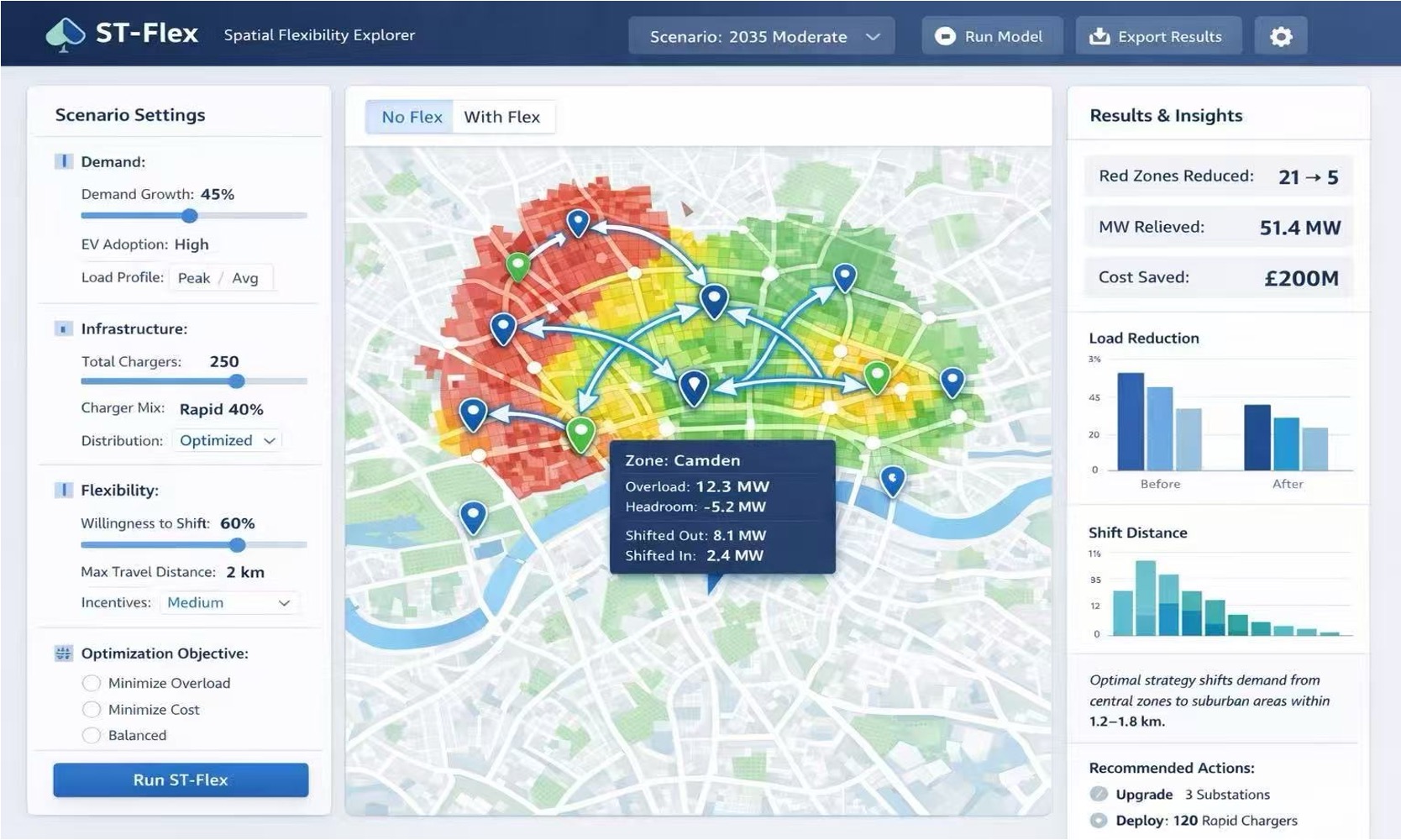
EV Charging and Energy Flexibility
Understanding how charging behaviour and mobility patterns can reduce pressure on power networks and support low-carbon energy systems.
Understanding how charging behaviour and mobility patterns can reduce pressure on power networks and support low-carbon energy systems.
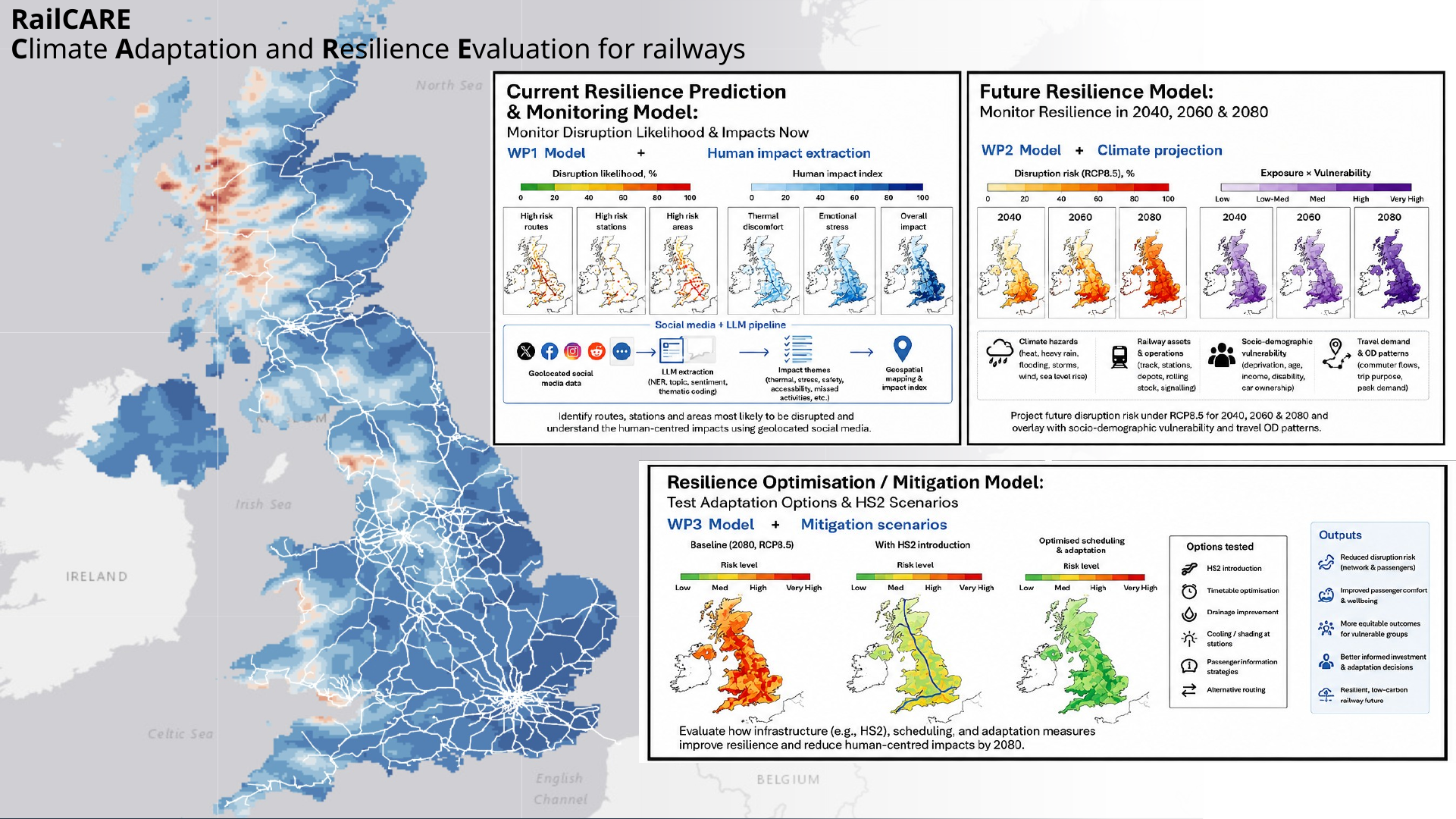
Assessing how rail, underground, and EV charging networks can adapt to climate risk, extreme weather, power disruption, and uneven spatial impacts.
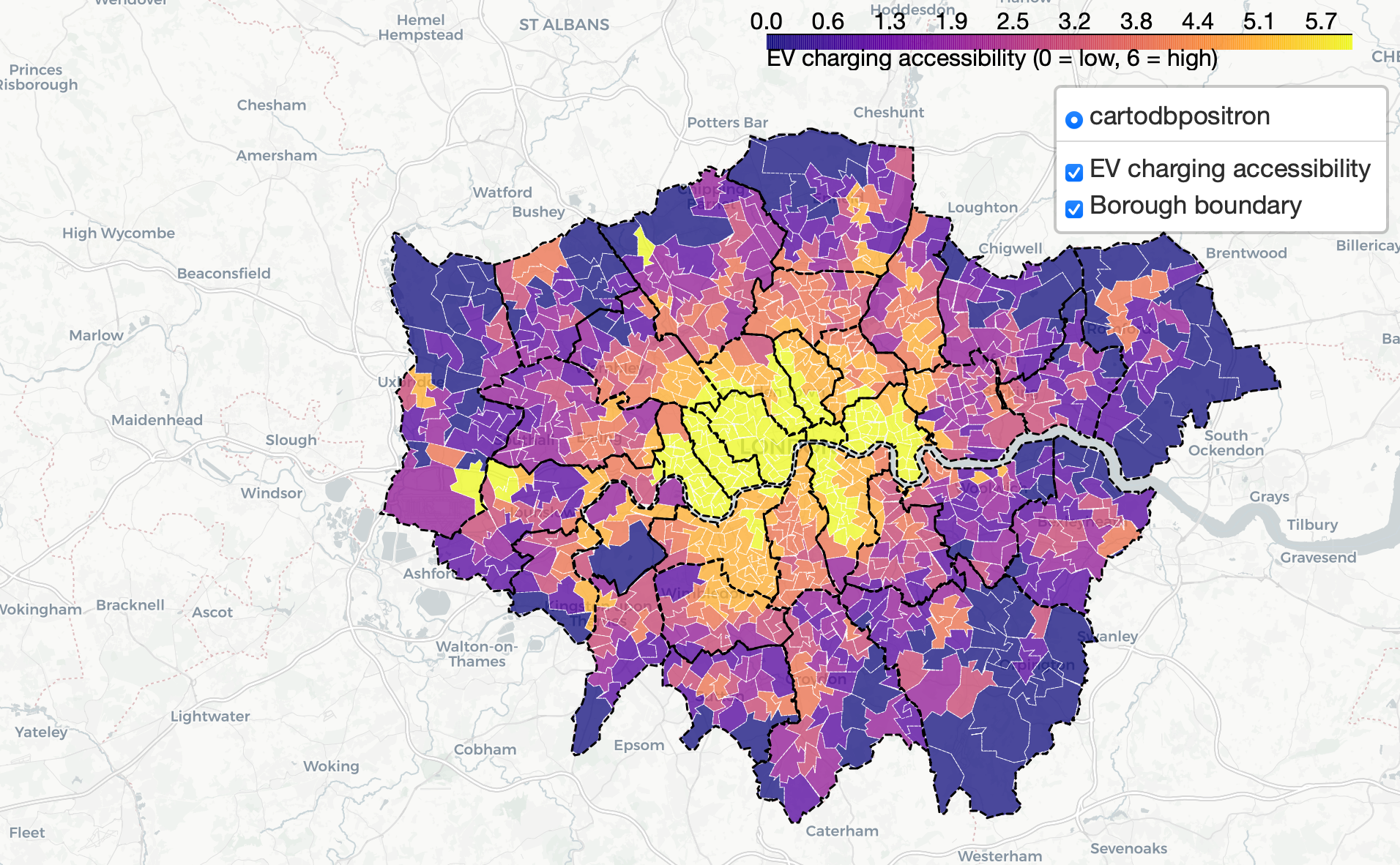
Identifying where public charging is needed, who is underserved, and how charger rollout can better align with equity, mobility needs, and grid readiness.
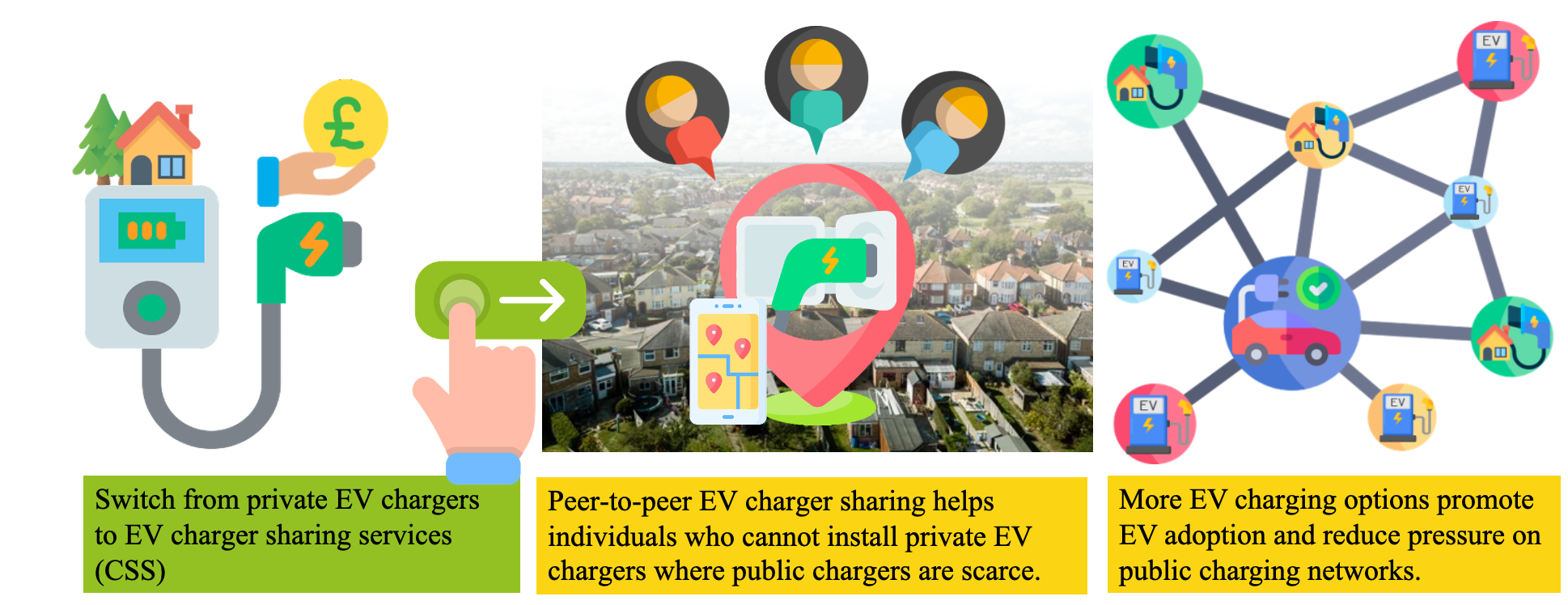
Investigating how peer-to-peer charger sharing and community charging models can complement public infrastructure, improve access in underserved areas, and create shared local benefits.
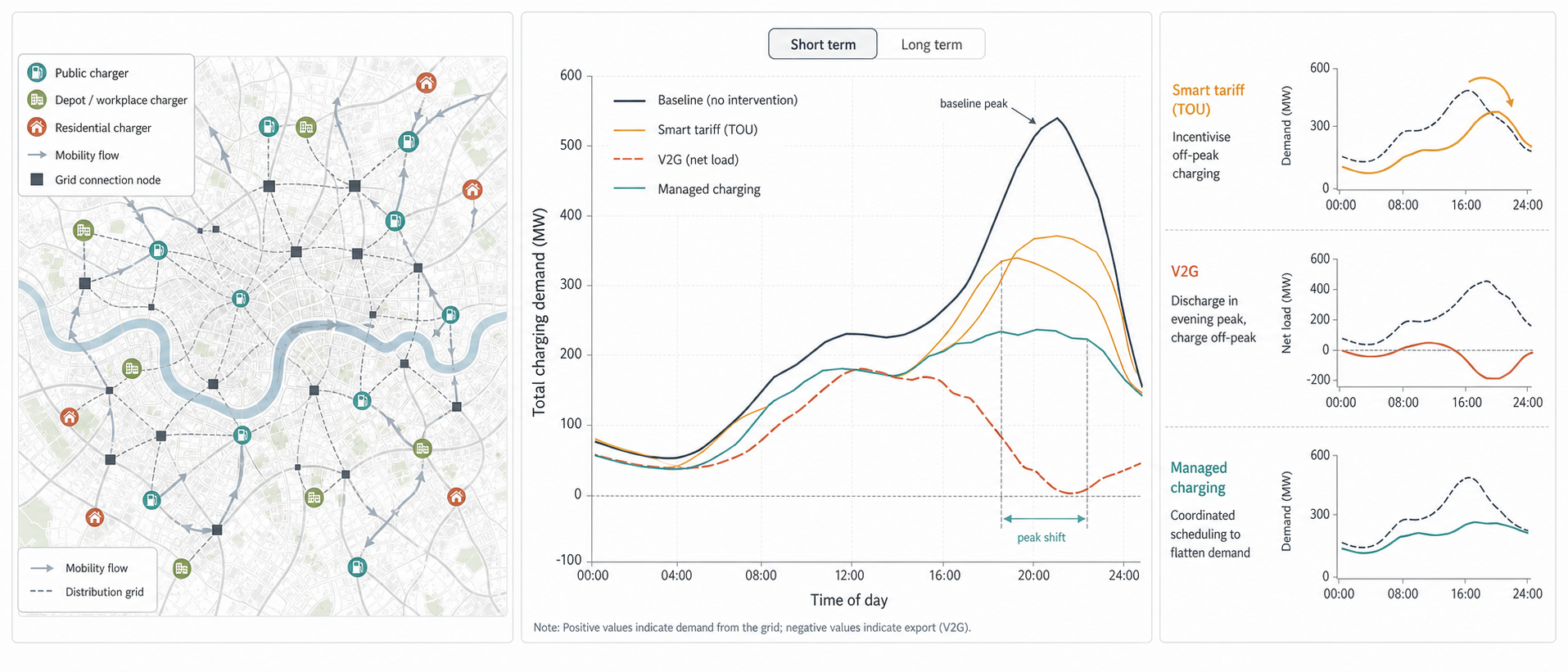
Forecasting short- and long-term charging demand to inform flexible charging, infrastructure planning, and the impacts of smart tariffs, V2G, and future mobility-energy scenarios.
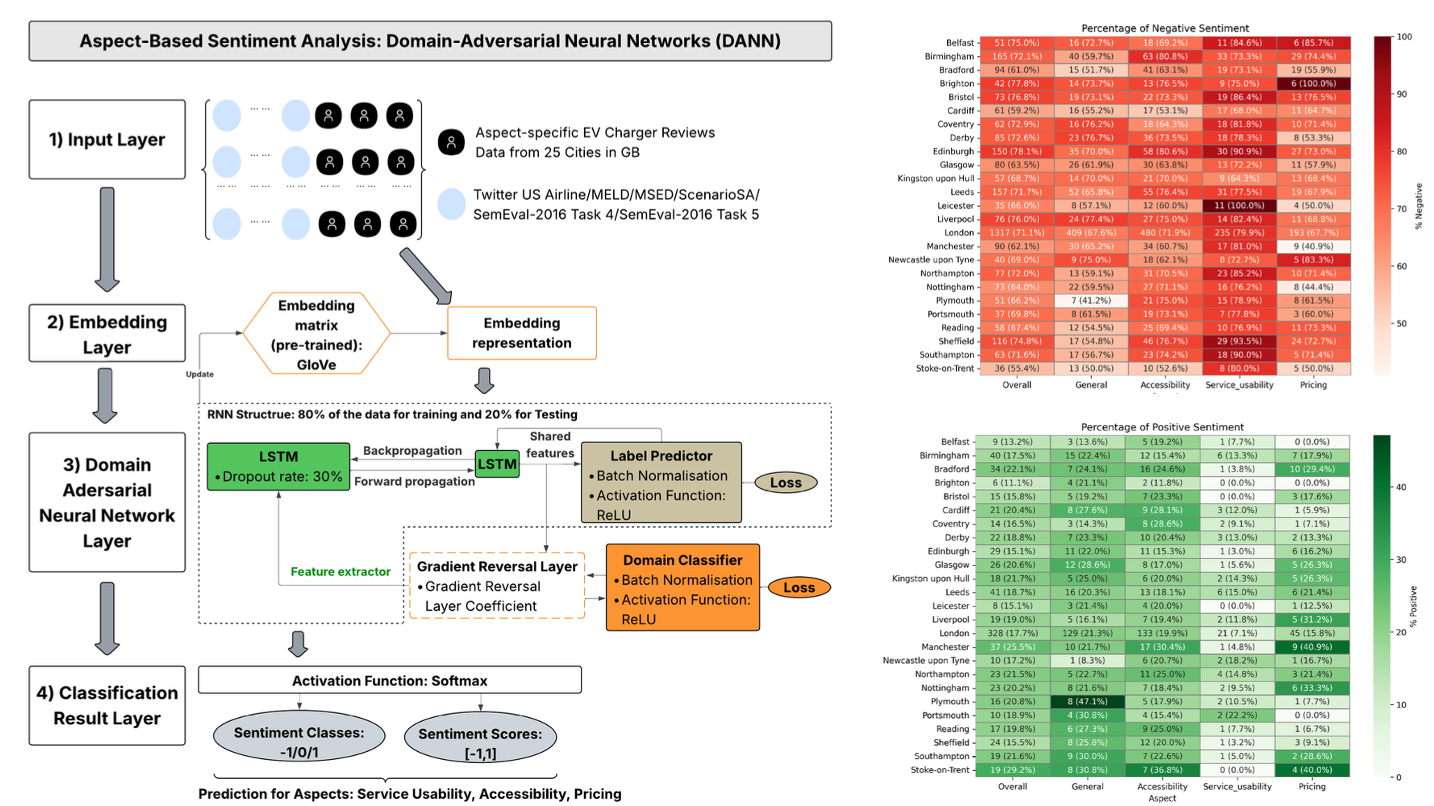
Using large language models and user feedback to understand charging experiences, reveal service barriers, and improve the quality, reliability, and accessibility of EV charging services.