Projects
Current projects examine network resilience, shared charging, and the energy challenges of strategic-road EV charging.
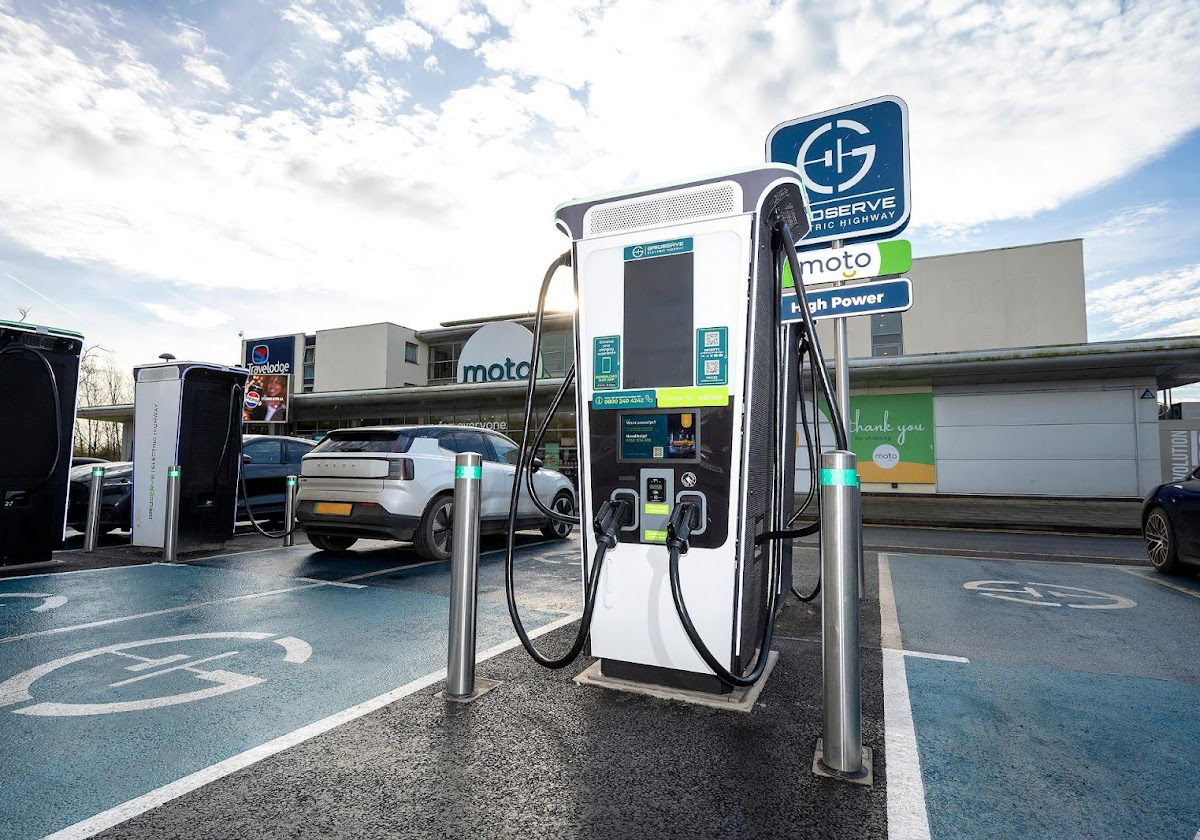
Increasing EV charging capacity on the strategic road network
Funded byInnovate UK
En-route charging on England’s Strategic Road Network is essential for reducing range anxiety and supporting long-distance EV travel. However, motorway service areas increasingly face a power challenge: rapid and ultra-rapid chargers can create sharp demand peaks, while local grid capacity, battery storage, on-site solar generation, and wider site energy needs must be coordinated in real time. This project develops multi-scale charging demand models and an intelligent energy management system for motorway service areas, using Donington Park as a real-world pilot. By modelling demand from individual charging sessions through to site-level peaks and longer-term patterns, the work supports buffered ultra-rapid charging solutions that can expand charging capacity more quickly, flexibly, and cost-effectively than conventional grid reinforcement alone.
Image source: Google Maps
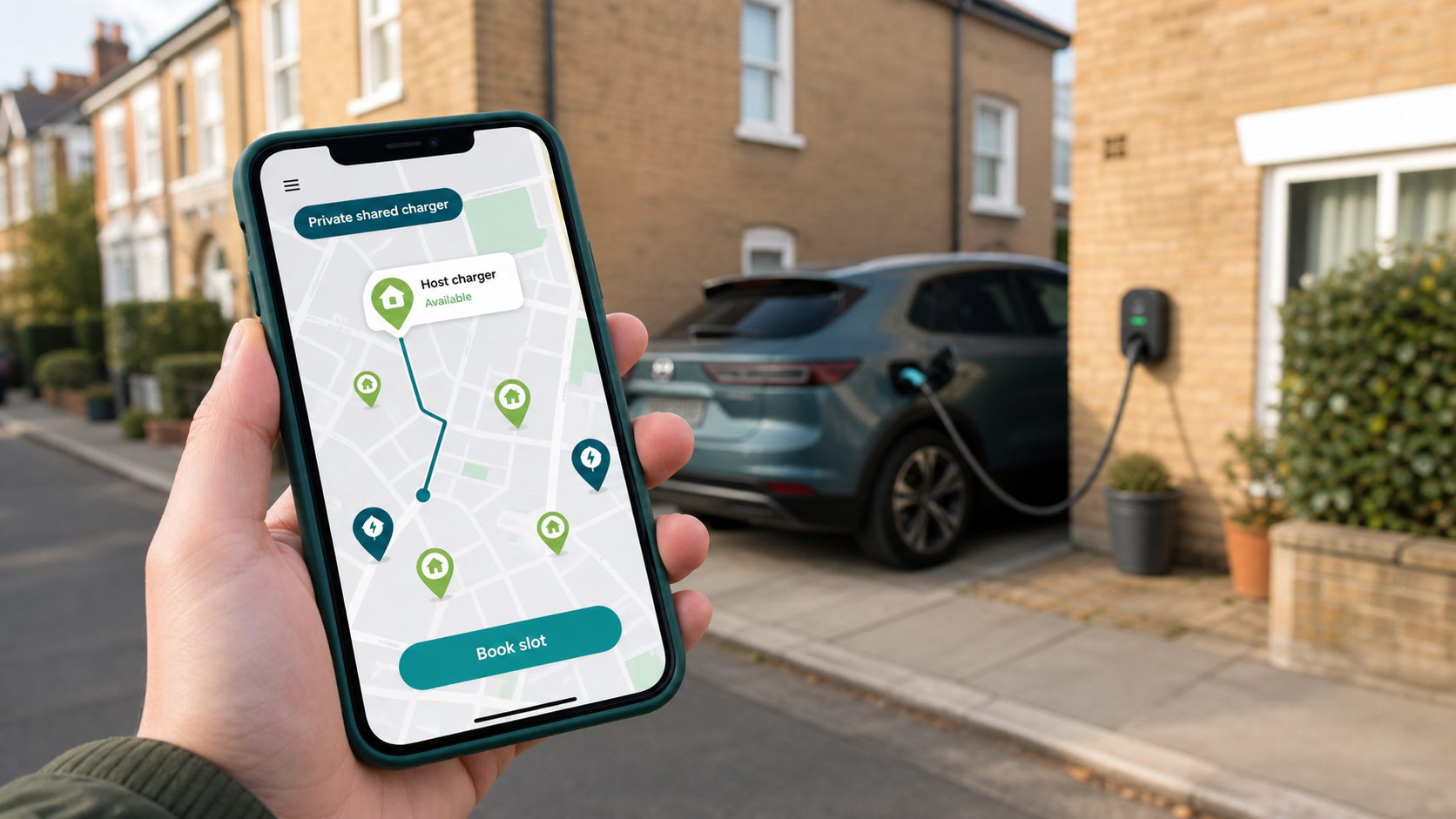
AI-Driven Prioritisation of Shared EV Charger Deployment: Balancing Supply and Demand
Funded byRoyal Society
Over 44% of UK homes lack off-road parking, creating a major barrier to convenient home charging as EV adoption grows. This project explores how shared private chargers can complement public charging networks by expanding access without large-scale infrastructure investment. It develops a data-driven Shared EV Prioritisation Index to identify areas with both strong charging demand and high potential charger supply. Combining machine learning, large language models, survey/interview evidence, social media data, multi-criteria decision-making and GIS analysis, the work supports policymakers and practitioners in targeting shared charging where it can deliver the greatest benefits for users, hosts, and an equitable EV transition.

A dynamic network approach to measuring railway resilience in Great Britain
Funded byLeverhulme Trust
With increasingly complex travel patterns and uncertain climate change, the ability of railway systems to resist, absorb, and recover from disruption has become critical. This project examines how railway network resilience changes over time under different types of disruption, including extreme weather, infrastructure failures, demand shocks, and power-related outages. Using dynamic network modelling, percolation analysis, and brokerage theory, it identifies critical stations and temporal vulnerabilities across the Great Britain railway system. The work supports more adaptive planning for climate-resilient, reliable, and interconnected transport-energy infrastructure.
Photo by Umair Dingmar on Unsplash